“What Goes with 7 to Make 10?” Learning Number Bonds Through a Silly Little Puzzle
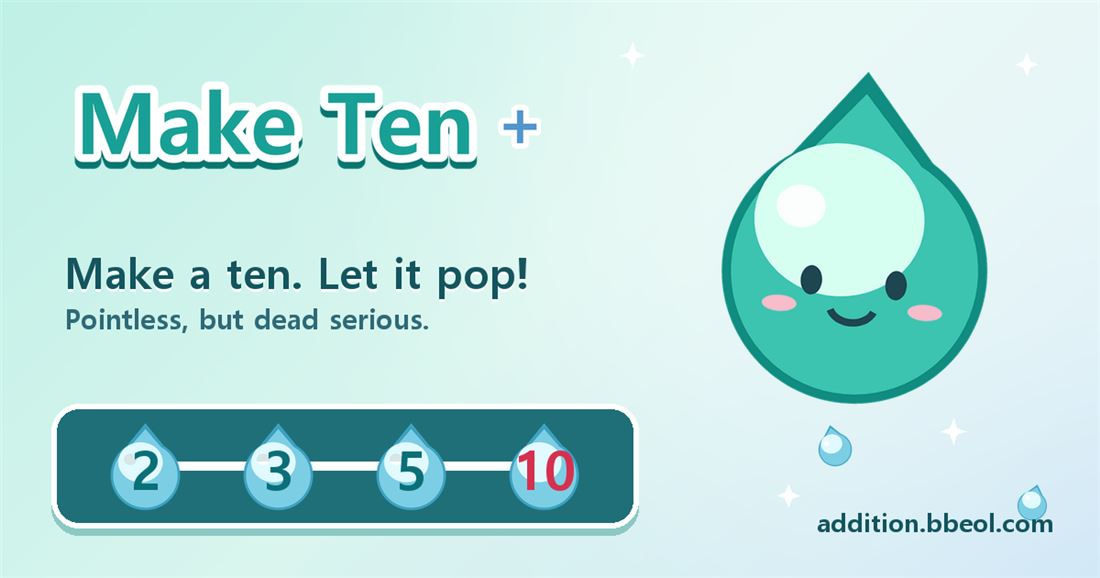
"What goes with 7 to make 10?" Even grown-ups sneak a finger count sometimes. Number bonds to 10 are one of the first big steps in early math. To add quickly across ten (like 8+5), a child first needs the feeling that "8 needs 2 to make 10" right at their fingertips.
Drilling worksheets tends to wear out kids and parents alike. Short, frequent and game-like practice means a lot fewer arguments. Here's how to practice it with Make Ten, a puzzle where you box numbers together to make 10.
Just five pairs make ten
There are only five pairs of numbers that make 10.
| Pair | Say it together |
|---|---|
| 1 + 9 | one short of ten is nine |
| 2 + 8 | two and eight |
| 3 + 7 | three and seven |
| 4 + 6 | four and six |
| 5 + 5 | double five |
When two neighboring numbers on the Make Ten board form one of these pairs, you can clear them right away. Start with a pairs-only game. Simply scanning the board and asking "There's a 3, where's a 7?" over and over makes finding pairs faster.
Next step: three or four numbers into ten
Once pairs feel easy, try making ten with three numbers: 2+3+5, 1+2+7 or 1+4+5. In your head, you combine the first two and check the rest as a bond, like "2+3=5, and 5+5=10". That's exactly the thinking behind adding across ten.
Make Ten scores one point per cleared cell, so boxing more numbers scores higher, and children go looking for longer sums on their own. A 4-point 1+2+3+4 is simply more exciting than a 2-point 1+9.
Counting every number inside
A Make Ten box adds every number inside it. With a 3 between a 4 and a 6, the total is 13 and nothing clears. Instead of adding just the two numbers you notice, this rule builds the habit of counting everything. Empty cells count as zero, so kids also see that adding zero changes nothing.
A suggested order for playing with kids
- Start in Practice. No timer and unlimited hints, so there's time to think. When stuck, use a hint to show what a correct box looks like.
- Add out loud. Saying "2, 3, 5... ten!" before drawing the box keeps counting and hands in step.
- One Daily Puzzle a day. Everyone gets the same board each day and only the first finish counts, which makes "just one game today" an easy promise to keep. The 🔥 streak adds a little motivation too.
- Save the 2-minute challenge for later. Racing the clock can tire kids quickly. Try it once the bonds come to mind instantly.
Adults: just play it for fun
Honestly, there is zero evidence this game is good for grown-ups. You are simply too busy hunting for tens for two minutes to think about anything else. We have also received reports (?) of parents who started "for the kids" and now secretly chase the high score. You have been warned.
No install or sign-up needed, and records stay in your browser.